Monday, April 28, 2014

May Drink of the Month - Sir Robert the Savage

South Bend has a new whiskey bar, and I couldn't be more excited. The Exchange opened up in the Citizens Bank and Trust building in the heart of downtown a few months ago, and their selection and staff is excellent. Their specialty is whiskey, served neat or on the rocks (and never with cola, as the menu explicitly points out), but they also have a great short list of mixed drinks that feature a few of their whiskeys. One of the ones I enjoyed trying last week was "Sir Robert the Savage." As far as I can tell, this cocktail is unique to The Exchange - I couldn't find it or anything similar online (which is awesome).

Eventually, I will need to visit The Exchange again and get their recipe for this drink. The menu gives us the four main ingredients (Bushmills Irish whiskey, Creme de Cassis, Orgeat syrup, and lemon juice), but it is up to us to discover the exact proportion of each ingredient. We've encountered most of these ingredients before (need an Orgeat primer? Click here), but Creme de Cassis is a new one for us. Originating in France, Creme de Cassis is made from crushed blackcurrant berries soaked in ethanol. It is a dark red (almost purple) digestif that is the favorite drink of Agatha Christie's famous French detective Hercule Poirot. It is most commonly used with white wine to make the cocktail Kir, but also has many other uses.

I spent a few hours on Saturday experimenting with different ingredient combinations, trying to recreate the purple cocktail I tried at The Exchange last Wednesday night. Below, you will  find a recipe that features my best guess for the cocktail. If the folks at The Exchange are nice enough to give me the recipe for their drink, I will update the blog later with their recipe as well. But whatever the result, an afternoon spent experimenting with cocktail construction is never an afternoon wasted (even if some of the combinations I tried were quite undrinkable - 2 oz of Dewar's scotch combined with a 1/2 oz of lemon juice, 1/2 oz of creme de cassis, and 1/4 oz of orgeat syrup is a recipe I will never plague the world with again).

Sir Robert the Savage - My Best Guess
In a cocktail shaker, combine:
2 oz Bushmills Irish Whiskey
3/4 oz Orgeat Syrup
1/2 oz lemon juice
1/2 oz Creme de Cassis

Shake over ice and strain into a rocks glass filled with ice.

I hope you enjoy this combination! Its a little on the sweet side - if that bothers you, you can reduce the amount of orgeat syrup, but don't go below 1/2 oz. If you do decrease your orgeat content, you may consider adding more Creme de Casis.

Enjoy your Sir Robert the Savage!


*Edit* I finally got back to The Exchange last night and my server was kind enough to share the recipe with me. I was pretty stinking close! Here are their mix proportions: 2 oz Bushmills, 3/4 oz Orgeat, 3/4 oz lemon juice, 1/2 oz Creme de Cassis.

Wednesday, March 26, 2014

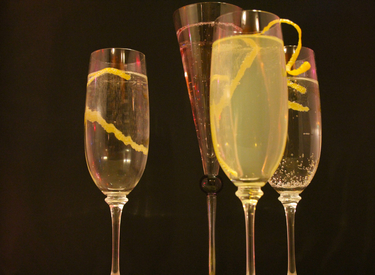
April Drink of the Month - Sparkling Wine Cocktails

One of the hardest ingredients for me to stock in my home bar is sparkling wine. Most drink recipes that call for bubbly only use 2-3 ounces, and I rarely make enough drinks to justify popping a cork on a whole bottle in one evening. Champagne stoppers are helpful tools, as they can keep sparkling wine fresh for up to one week – but even with this lengthier shelf-life, I often have a hard time getting through a whole bottle. However, few things scream celebration quite as much as champagne, and after a long winter, the impending arrival of spring deserves to be celebrated [editors note: I wrote this post on Monday, when sunlight and 40 degree temperatures got me excited for the promise of flowers and seasonal allergies. We have since had snow here in South Bend for the past two days. What the heck Spring?] With that in mind, this month Bar Kiley will be featuring a selection of sparkling wine cocktails. Perhaps you might be able to find an occasion to celebrate with one of these?

Need to learn more about types of sparkling wine? Check out the excellent tutorial from Serious Eats here.

Lemoncello Sparkler

This is a cocktail I first made to celebrate New Years Eve last year. This drink combines the tart and sweet lemoncello with orange-forward Cointreau and tops this all with 4-5 ounces of champagne. This can be served as a punch or by the glass. If served as a punch, garnish with large lemon wheels to add brightness. But if you are serving by the glass, try adding 2-3 frozen strawberries – the strawberry blends well with the other flavors, helps keep the drink cool, and provides a nice finish to the drink.
 
In a cocktail shaker, combine:
1 oz lemoncello
½ oz Cointreau

Add 2 frozen strawberries to a champagne flute. Shake lemoncello and Cointreau over ice for 10 seconds, strain over top of strawberries. Top with 4 oz of champagne and serve. Want to make your own lemoncello? The recipe is here.

Original Champagne Cocktail

The original champagne cocktail (the name really does say it all) combines two of the very best exports France has given us: champagne and cognac. This is a very sweet drink, and it is a drink that is extremely visually pleasing to construct. Make sure you build this drink in front of people!

Drop a sugar cube into a champagne flute. Douse the sugar with 2-3 dashes of Angostura bitters. Add ½ ounce of cognac on top of the sugar/bitters mixture and then top with 3 ounces of chilled champagne. Finish the drink with a maraschino cherry and a lemon zest.

Pear Bellini

While the Mimosa is the quintessential brunch beverage, my favorite socially acceptable way to drink in the morning is the Bellini. Peach is the most common Bellini variant, but I really enjoy this recipe which combines pear, lemon juice, simple syrup and Prosecco.
Peel and core 4-6  pears (either Bartlett or Anjou varieties). Place the peeled pears in a blender with ¾ cup of simple syrup and ¼ cup of lemon juice. Blend until you have a pulpy mixture that pours smoothly. You may need more or less syrup/lemon juice mixture depending on the amount of fruit you have.


Pour 1 to 2 ounces of pureed pear mixture into a champagne flute. Top with 3-4 oz of chilled Prosecco (not champagne – this is important!) and serve.

You might also want to try out the Veronica Rose again as well - find the recipe here.

Enjoy your champagne cocktails!

Wednesday, February 26, 2014

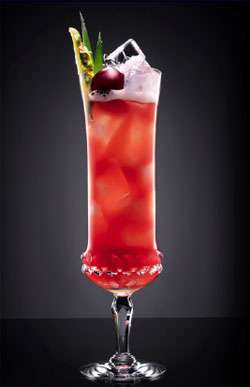
March Drink of the Month - The Singapore Sling

The Singapore Sling was one of the first "complicated" drinks that I ever learned to make. At the time, I had never heard of Cherry Heering or Benedictine, and so I spent way too much time online looking for acceptable substitutes that I may have had in my (then) tiny bar. I ended up making a cocktail that was little more than pineapple juice watered down with a little bit of gin, grenadine, and cheap cherry brandy (and as far as drinks go, it was stunningly mediocre). However, my interest was piqued and soon I decided that creating an acceptable Singapore Sling would be one of my first true bartending challenges.

The Singapore Sling comes to us from the Raffles Hotel in (you guessed it) Singapore, and it was first mixed in the mid-1910s. The term "sling" refers to any drink combining alcohol, fruit flavors, sugar, and water. Originally, bitters were required for a drink to be considered a cocktail, so other terms such as "sling," "fizz," and "flip" were used to denote the specific ingredients of the beverage.

The Singapore Sling is a "long" drink - which means that it contains significantly more liquid volume than a "short" drink. Note, however, that this does not necessarily mean that long drinks contain more alcohol - long drinks usually have similar alcohol content to short drinks, but the greater overall volume means that the drink is more diluted. The obvious exception to the rule here would be something like a Long Island Iced Tea. While you may serve a short drink in a rocks glass or a lowball glass, long drinks are almost exclusively served in highball (Collins) or hurricane glasses.


The key ingredients of the Singapore Sling are gin, citrus juice, and cherry flavoring, but many different recipes exist. While the IBA has a preferred recipe for the cocktail, almost every bar makes this drink their own way. The first bartending book I ever used suggested 5 oz of pineapple juice, which is way too much. I've also seen modern recipes that include zero pineapple juice. To each their own, I suppose. Below, I've included two possibilities for creating the Singapore Sling. Why not try them both out and let me know which you like?

Singapore Sling - Pineapple Heavy Recipe
In a blender, combine:
1 oz dry gin
1 oz Benedictine*
3/4 oz cherry brandy (Cherry Heering is preferable)
1/2 oz grenadine (use homemade if possible!)
1/2 oz Cointreau
1 oz fresh lime juice
4 oz fresh pineapple juice

Blend until pineapple juice creates "frothy" top. Pour into hurricane glass with ice cubes. Top with 2 dashes of Angostura bitters or float 1/2 oz of sloe gin on top using a bar spoon.

Singapore Sling - Light on the Pineapple
In a cocktail shaker, combine:
1 oz dry gin
1 oz Benedictine*
1 oz cherry brandy (Cherry Heering is preferable)
3/4 oz Cointreau
1/2 oz fresh lime juice
1 oz fresh pineapple juice

Shake over ice and strain into a highball (Collins) glass filled with ice cubes. Top with 2 oz of soda water and 2 dashes of orange bitters.

*Benedictine (despite the name) is not made by monks (bummer, right?). It is, however, a fantastic French herbal liqueur. It is often sold pre-mixed with brandy as "B&B." It is well worth investing in a bottle of Benedictine - it is an amazing after-dinner sipper, combining sweetness with herbal complexity. However, if you need to cut corners, use brandy here in a pinch, or yellow Chartreuse if you have that lying around for some reason (but at $60 a bottle, I'd just go buy the Benedictine instead of wasting the Chartreuse).

Enjoy your Singapore Sling!

Friday, February 14, 2014

Valentine's Day Special - Fun with Aperol

Since today is Valentine's Day, there is a felt need for creating and giving that special someone a pink drink. While I support this trend, please resist the temptation to buy UV Pink or some other noxious, flavored vodka in order to make your significant other rose-colored cocktails. There are so many better options, including our topic for discussion today: Aperol. Aperol is a orange/red Italian liqueur, very similar to Campari, with a flavor profile that includes bitter orange and rhubarb. While Campari can be quite bitter, which is a turn off for some people, Aperol has a much sweeter profile and mixes well with other spirits, particularly gin, rye, and bourbon, as well as sparkling wine. Here are a couple of easy Aperol drinks that you might consider trying tonight:

The Veronica Rose

To do this drink properly, the fine folks at Imbibe Magazine recommend making your own rose-infused simple syrup. That is a process that takes a little bit of time, however, so here at Bar Kiley, we've come up with a palatable work-around. Here's the recipe for this bubbly, sweet sipper:

In a mixing glass, combine:
1/2 oz Aperol
1/2 oz simple syrup
2 dashes rose water
2 dashes orange bitters

Stir with ice to combine, strain into a champagne flute. Add 3-4 oz champagne to top off the glass and serve.

Buongiorno

This drink comes from friends of ours in Chicago, and it is quite excellent. Made properly this drink calls for St. George Terroir Gin and Bergamot simple syrup. Here at Bar Kiley, those ingredients fall a little outside our price range (what with the reality of being a graduate student and all). However, this adjusted recipe still tastes great and brings out the Aperol flavor very nicely, even if you lose out a little bit on the full flavor profile:

In a mixing glass, combine:
1 oz dry gin*
1 oz Aperol
1 oz lemon juice
1 oz simple syrup
1 egg white

Dry shake for 7-10 seconds to allow the egg to emulsify, then add ice and shake for 10-15 seconds. Strain and serve in a coupe glass. Add 2-3 dashes of bitters (orange bitters work well with the flavor profile, but you can never go wromg with classic Angostura) on top of the egg white foam - if you have a dropper, you can even make cool shapes!

*If you have some spare time on your hands, you may wish to try this recipe with a Bar Kiley tweak. Instead of gin, we used Blood Orange infused vodka and really enjoyed the result. To make the specialty vodka, steep the peels of 4-6 blood oranges (with all the pith removed) in 750 ml of vodka for a week, along with the juice of two of the oranges. Double strain the liquid through cheese cloth, and then it is ready to serve. The resulting liquor is a little bitter, but with a fantastic blood orange flavor profile.

Enjoy and Happy Valentines Day!

Wednesday, January 29, 2014

February Drink of the Month - Pisco Sour

For my birthday this year, I decided to find a new bartending book for myself. Amazon was helpful in suggesting the "PDT Cocktail Book," and I couldn't be happier with my purchase. There are hundreds of unique recipes as well as plenty of classic cocktails. While some of the recipes call for liquors our of my price range (I am a humble graduate student, after all), I can make most of them with a little liberal substitution.

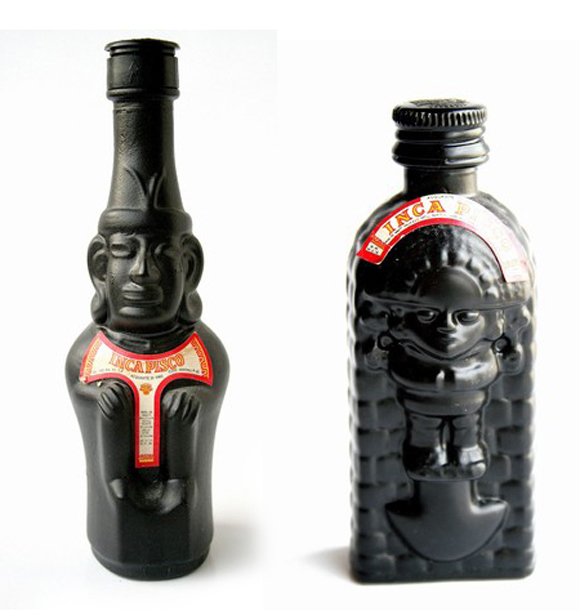
I love new books because they challenge me to try new techniques or new ingredients. Ever since adding the Aruba to my repertoire last month, I've been on an egg white kick. I love the froth and texture that it adds to drinks, and making drinks with raw eggs never fails to impress folks. This month's drink, the Pisco Sour, continues my egg white trend using a new ingredient - Chilean (or Peruvian) brandy called Pisco.

All brandy is made from distilled grapes. Just as in wine, different grapes lend themselves to slightly different flavored brandies, leading to flavor differences between the classic French Cognacs or Armagnacs. There are a few other significant steps in the distillation process that lend unique flavors - for instance, Armagnac is traditionally made using a column still while Cognac is made using a copper pot still (similar to Irish whiskey). The final step in producing fine brandy is to allow it to age in oak casks for a period of time. The oak gives the otherwise clear spirit its distinctive golden color and imparts much of the caramel flavor to brandies.

Pisco is different in that it is never aged. It is distilled from a blend of either Chilean or Peruvian grapes in a copper pot still, but it is then placed in either glass or stainless steel containers to rest for a period of time. The result is a clear liquor that still retains a strong "fruit-forward" flavor that stands out all the more because of the lack of oak-infused flavor. Right now, Brandy is my favorite cocktail base - Pisco is fun to mix with because its strong floral notes make it just different enough that it totally changes the flavor profile of almost any brandy drink.

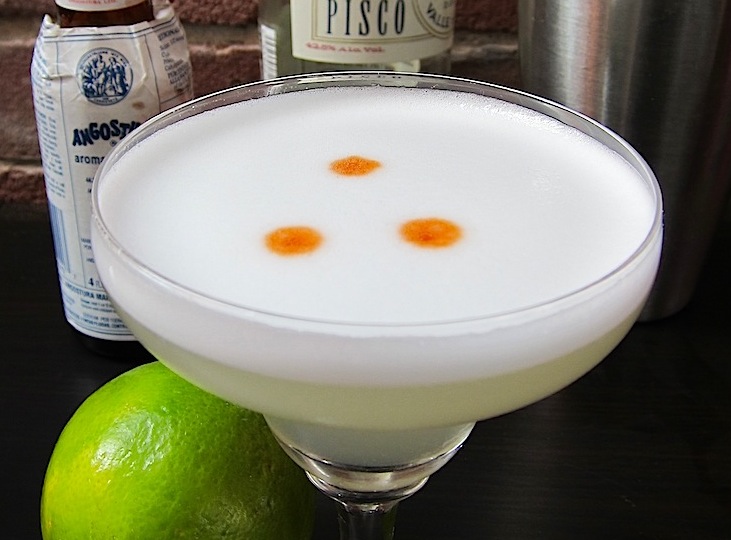
Here is the recipe for the Pisco Sour, courtesy of the PDT Cocktail book:

In a cocktail shaker, combine:
2 oz Pisco*
3/4 oz lime juice
3/4 oz simple syrup
1 egg white

Dry shake these ingredients for 5-10 seconds to allow the egg white to emulsify. Add ice and shake for 10 seconds until frothy. Strain and serve in a coupe glass - you should have a nice 1/2 to 1 inch or so of foam on top of your drink. Add 3-4 drops of Angostura bitters on top and serve.

*A quick note on Pisco brands: Pisco comes in several varieties - Chilean, Peruvian, and now several American distillers also make Pisco. There is debate which country - Peru or Chile - gave rise to Pisco. It appears that Peru has a better claim, but I use Chilean "Capel" Pisco, as it is the most affordable. You can find decent Capel Pisco for under $15 a bottle. Peruvian Machu Pisco is a much nicer spirit, but will cost closer to $30-35.

Enjoy your Pisco Sour! 

Thursday, January 2, 2014

January Drink of the Month - Tropical Trio

Happy New Year to you all from Bar Kiley! I spent my New Years in Minneapolis, MN this year, where the high temperature on January 1st was a balmy -6°. Things didn't get much better upon returning to South Bend, where it has been snowing for the last two days. I've made it my personal mission to fight off the winter doldrums - we're fighting back against Old Man Winter here at Bar Kiley this month by featuring a trio of tropical drinks to help put you in a warm place, even if the warmth only goes to your stomach...

Drink #1: Mai Tai

Maita'i is the Tahitian word for "good" and this drink certainly lives up to its billing. Most people credit the Mai Tai to Trader Vic's restaurant in California in the mid 1940s, but it may have originated as early as 1933. There are two very different ways to build a Mai Tai - one results in an understated drink heavy on rum flavor with a bit of citrus and almond and the other gives you an incredibly sweet, fruity drink. I greatly prefer the classic Mai Tai, but both will do wonders to keep you feeling tropical!

Classic Mai Tai:
In a cocktail shaker, combine:
2 oz white rum
3/4 oz orange curacao (triple sec will do here in a pinch)
3/4 oz orgeat syrup*
1/2 oz lime juice
Use the back of the bar spoon to float your dark rum. You
can also pour down the spoon if you have a spiral-cut
bar spoon, which is a great tool to own!

Shake over ice and strain. Then, using the back of a bar spoon, float 1 oz dark rum on the top of the drink.
The dark rum is lighter than the drink you've made and will float on top of the rum mixture as long as you pour it slowly and distribute it over a larger surface area (hence the use of the spoon). Garnish with a pineapple section and serve.

* Orgeat syrup is so named because it was originally made with barley (Orgeat is a version of the Latin word hordeata - "made with barley). It is an almond flavored syrup made from almonds, sugar, and rose or orange flower water. It is a milky color and gives the Mai Tai its distinctive flavor. You could make your own Orgeat syrup at home, but there are also pre-made syrups available at most liquor stores.

My stop light Mai Tai
Fruity Mai Tai:
In a cocktail shaker, combine:
1 oz light rum
1 oz apricot brandy
3 oz orange juice
3 oz pineapple juice

Shake over ice and strain. Then slowly sink 1 oz grenadine to the bottom of the glass. The grenadine syrup is quite heavy and should settle to the bottom forming a nice red layer. Then, repeating the step from the Classic Mai Tai, float 1 oz dark rum on top of the drink using a bar spoon. Serve with a straw or cocktail stirrer. The drink will have a pretty three-layer look, but you will want to stir it up before imbibing.

Drink #2: Aruba

The Aruba cocktail also features Orgeat syrup, but uses gin as its base liquor. It features hints of orange, lemon and almond to compliment the gin and uses egg white to create a pleasant frothy layer on top. (Scared of using egg whites? Ty it, the gin and lemon will kill all the bugs, so never fear! Still squeamish? Read this article from the Washington Post, and then give it a try anyway!)

In a cocktail shaker, combine:
2 oz gin
1/2 oz white curacao (again, triple sec works in a pinch)
1/2 of an egg white
1 oz lemon juice
1/4 oz orgeat syrup

Shake over ice, strain and serve in a highball glass with a lemon ring garnish. The egg white should produce a nice foam that will sit on top of the drink. Seriously, make sure you use the egg white - its worth it! If you read the Post article, the Clover Club is another excellent drink - try it some time (maybe we'll feature it in a future post...)

Drink #3: The Blue Hawaiian

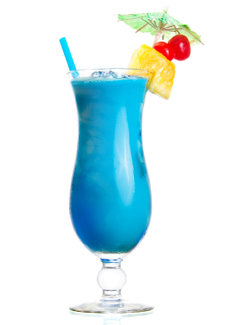
Finally, you can't have a feature on tropical drinks without adding the Blue Hawaiian, which is the only reason most bartenders own Blue Curacao (although you may remember the Blue Orchid from August which also uses Blue Curacao). This drink combines rum with pineapple and coconut cream and is often topped with extravagant tropical garnishes. Plus, it's blue - guests tend to notice that fact when its served....

In a cocktail shaker, combine:
1 oz blue curacao
1 oz coconut cream (Coco Real is the brand I most often find in the store, often in the mixers section next to the grenadine and lime juice)
2 oz light rum
2 oz pineapple juice

Shake over ice, strain and serve. Impress your friends with your blue drink making expertise and your over-the-top garnishes. If you start with a pineapple wedge, you can use a toothpick to add all sorts of flair - orange wheels, cherries, limes and even prickly pear!

Before we go,one quick note concerning rum: Just in case anyone needed this cleared up, there are three basic types of rum: white rum, light/golden rum, and dark rum. All three of these varieties are sold as-is, but you can also find spiced versions of all three types. Bacardi is the most common white & light rum, and Meyers is the most commonly used dark rum. Captain Morgans is an example of light spiced rum, while Kraken is an example of dark spiced rum. You can substitute spiced rum in any of these recipes, but note that the flavor profile will change a bit as a result. When making a Mai Tai or a Blue Hawaiian, make sure you use the right type of rum - don't try to float Bacardi Gold in your Mai Tai, you'll be disappointed with the results!

Enjoy your Tropical Trios!

Tuesday, December 10, 2013

December Drink of the Month - The Opera Glove

I have not yet given my friend Matt Haggerty enough credit on this blog. Bar Kiley the blog came about because Matt suggested that I blog about my hobby and he has continued to be one of the blog’s biggest supporter (and, to date, still the only person to post a comment on the blog). Last month, he sent me a link to a few holiday drinks (found here), and I thought we might try out one of them for December – the Peppermint Alexander. It seemed perfect after we had featured the Brandy Alexander last month, so I went out last week and picked up a bottle of Godiva White Chocolate liqueur for Zack and I to play around with at the bar.

We dutifully made up the Peppermint Alexander as per the recipe linked above (equal parts white chocolate liqueur, vanilla vodka and peppermint schnapps with a splash of cream), but we were a little disappointed with the result. The peppermint flavor was way too strong and it drowned out the white chocolate flavor almost completely (which is a problem given the price tag on the Godiva liqueur). It was not an unpleasant drink, but the other flavors did not add much to the overriding strong notes of peppermint.

We tried a few different ways to modify the drink, but we weren't really happy with any of our results. I included the best version of the drink below, but ultimately we decided to move on and see if we couldn't find a new way to feature the Godiva White Chocolate liqueur with our own recipe. We decided  we wanted to keep the vanilla hints featured in the Peppermint Alexander, but we chose to feature brandy as the main flavor in the drink. The smoothness of the brandy gives a nice boozy flavor to the Godiva liqueur, but it is not overwhelming – the white chocolate still came through quite nicely. We named our creation the “Opera Glove” because it was long, white and classy. We hope you enjoy it!

The Opera Glove Cocktail
In a cocktail shaker, combine
1.5 oz Godiva White Chocolate liqueur
1 oz VS or better brandy
0.5 oz vanilla schnapps
Splash of cream or half & half

Shake over ice until the drink is frothy, strain and serve is a martini glass. If you are a chocolate fan, this drink could benefit from a spiral drizzle of chocolate syrup in the center as a garnish. However, if you’re me (and you are a weirdo and don’t like dark or milk chocolate), garnish the rim with a strawberry.

A few notes, as always:
*The same notes concerning cream from the Brandy Alexander apply here. I would recommend half and half for the Opera Glove – but feel free to use a “large-ish” splash – I think this drink tastes better when it is a little thicker.

*The same notes about brandy found in the Side by Sidecar post also apply here. If you are willing to invest in the Godiva liqueur (you don’t need to – there are cheaper white chocolate cream liqueurs), then you should make sure the rest of your ingredient are up to the same level of quality. VS is great, VSOP is even better.

We hope you enjoy our creation. As an added bonus, here is the modified recipe for the best version of the Peppermint Alexander:

In a cocktail shaker, combine:
1 oz Godiva White Chocolate Liqueur
0.5 oz vodka
0.5 oz vanilla schnapps
1/3 oz peppermint schnapps
2/3 oz cream

Shake over ice until the drink is frothy. Strain and serve in a martini glass. Garnish with a small candy cane as a stirring stick.

Enjoy your Opera Glove!