Monday, September 1, 2014

September Drink of the Month - the Caipirinha

Happy September friends! I'm so sorry I was unable to post a drink of the month for August, but it's been a busy month for me. I started the month moving across campus from Zahm House to Duncan Hall, where I will be an Assistant Rector (hall director) for the 2014-2015 school year. As soon as I moved my last box, Ann and I departed South Bend for a week of vacation with my family in Virginia. We got back just in time to attend a wedding and then I began a week of training for my new job. During that time period, I also interviewed for and was offered a job for next year as the Director of Religious Education at parish here in South Bend (which I accepted - I'll be beginning part time in January and then I'll start full time in July). Life goes on, as the next week we had a retreat for our MDiv program and the first week of classes. Finally, I closed out the month by proposing to my (then) girlfriend Ann Mason (because now she's my fiancee!) - and she said yes! So you'll forgive me my (three) loyal readers if I'm a bit behind - over the course of August I moved, went on vacation, started a new job and interviewed and was hired for another one, started my last year of grad school and got engaged. What an exciting month!

In honor of Miss Ann Mason, who won me over with the promise of a friendly bartender serving "bigger than normal" rum and cokes when we first met, this month's drink features Cachaça, the Brazilian evil twin to Caribbean rum (Ann, we'll do something Christmas-y next month, I promise). Like rum, Cachaça is made from sugarcane. However, unlike rum, which is usually made from molasses (processed sugarcane), Cachaça is made from fresh sugarcane juice which is then fermented and distilled. The liquor has many colorful nicknames in Brazil, including "heart-opener" and "tiger breath" (as well as "eye wash," which is less flattering).

The Caipirinha is the most ubiquitous Cachaça beverage. Its name roughly translates as "little hillbilly," but the term is somewhat archaic - the term is much more commonly associated with the drink than any social classes. It is an extremely simple drink to make, featuring only four ingredients - ice, lime, sugar and Cachaça. The artistry in this drink comes in finding the correct proportions and in the technique used to prepare and muddle the lime, and finding the correct (fresh) ingredients. The classic IBA recipe calls for brown sugar , but most bartenders use white superfine sugar.

Here is the recipe for the Caipirinha:

Begin with 1/2 of a lime cut into four quarters (lengthwise) in an Old Fashioned glass. Top with 2 heaping
teaspoons of superfine sugar (or try out brown sugar if you wish). Muddle the lime and sugar together.* Top with 2 ounces of Cachaça, and then add crushed ice to fill the glass. No garnish is needed.

*I'm currently reading through bartender Jeffrey Morgenthaler's "The Bar Book" which places a premium on technique, so I will follow his admonition about muddling:
Cut your [limes] into quarters... put the citrus in your glass, preferably peel side up, and then add the sugar. Work the cirtus by pressing and twisting it with the muddler, grinding the sugar into the peel. The sugar acts as an abrasive and helps liberate the citrus oils and juice. As the juice is released, it will form a syrup with the sugar. Press and twist until you see a nice syrup forming and you smell the fragrance of citrus zest. A good bartender uses every sense, and your sense of smell is one of the most critical tools (p. 235).
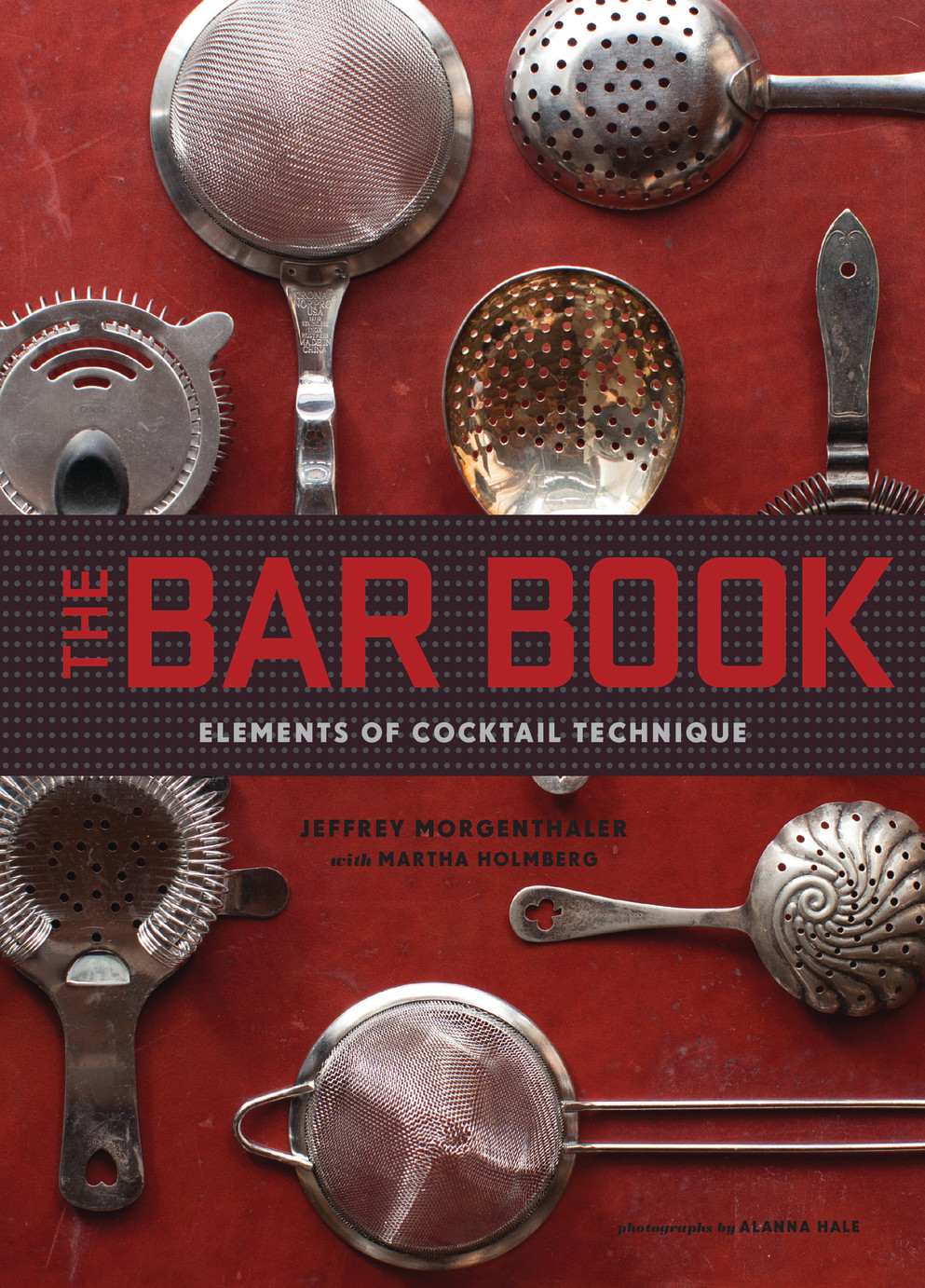
Morgenthaler's book is really great. He claims this is one of the first books that focuses not on recipes or ingredients, but on bar technique, and he goes into extreme detail - his whole first chapter is on how to select and prepare citrus (for instance, limes should always be cut across the "equator" - in between the stem and the nubbin. He also tells us that there is absolutely no difference in juice production between room temperature and refrigerated limes. Who knew?). I highly recommend the book, and I hope to have another post up this month after digging deeper into his work - he is also featured in my July issue of Imbibe magazine, so I'm excited to keep reading!


I hope you enjoy your Caipirinha (with your properly muddled limes of course)!

Saturday, July 5, 2014

July Drink of the Month - Dragonberry Lemonade

As much as I wanted to make a red, white, and blue shooter for the Fourth of July, most of these drinks are gross. If you want to poison your insides with blue curacao, peach schnapps and grenadine (top to bottom order), then please be my guest. But as much as I love sugary drinks, that above combination is a little bit too much for me. Even I have my limits when it comes to sugar.


Instead, I've decided that - in honor of America - we're going to make a twist on a classic American drink: lemonade. The drink of the month, Dragonberry Lemonade, was something I tried last week at Wally's in Sagatuck, MI. While the bartender was not on hand to give me his recipe, I came home and I believe I've been able to recreate the drink fairly faithfully. The drink is named for the main ingredient, Bacardi Dragonberry flavored rum, which is rum infused with strawberry and dragon fruit. It also features one of my favorite ingredients, St. Germain elderflower liqueur, as well as ginger beer for a little extra spice and muddled fruit for texture and little bursts of sweetness in the midst of the tart lemon flavor. I hope you enjoy the heck out of it!

Dragonberry Lemonade

In a cocktail shaker, combine the following ingredients:
2 oz Bacardi Dragonberry rum
1 oz St Germain
1 oz simple syrup (1:1 water/sugar)
1 oz fresh lemon juice

Shake over ice, strain and pour into a highball glass. Muddle in 4-6 strawberries or raspberries. Add ice and top with ginger beer (approximately 4 ounces). Stir and serve!

Enjoy your Dragonberry Lemonade!

Saturday, May 31, 2014

June Drink of the Month - The Slivopolitan

Last month, I bought a bottle of Eastern European plum brandy (called Slivovitz here in the US). It belongs to a family of fruit brandies that my Hungarian relatives would call Palinka, but its also called Rakia in the Czech Republic and elsewhere. My mom did some digging into our family tree, and she is pretty convinced that some of her relatives bootlegged this stuff during Prohibition. I can confirm that it is still a staple of the Hungarian Cultural Club in Cleveland, OH - my mom went up for a dinner a few months ago, and they had an ice sculpture that dispensed frosty Palinka for their guests.

I was first introduced to Slivovitz by my great uncle Jim, who always had a bottle or two in his freezer, as any good Hungarian should. After buying my very own bottle, I sent my mom a picture, thinking she would appreciate my attempts to appropriate my ethnic heritage. Below is the transcript of our conversation:

Me: [Picture of bottle of Slivovitz] Uncle Jim would be proud!
Mom: Where is this and are they passing it through an ice sculpture to chill?
Me: In my fridge, getting icy.
Mom: So you willingly bought that paint thinner to consume on purpose?
Me: Its your fault that I'm half Hungarian. I blame genetics.
Mom: In the morning, you'll be blaming that rot-gut.

As you may be able to decipher from the conversation above, the problem with Palinka is that it is just  *tad* bit on the harsh side. It has a strong bite that is evident when you first taste the clear liquor and gets stronger as it works its way down your throat. I'm doing a great job selling this so far, right? But here's the thing - if you can get past the sharpness (or if you're numb to it after years of liver abuse, as must be true of all Eastern Europeans), it has a really unique, nice taste! I really don't mind Slivovitz by itself, but apparently its not for everyone (Ann gave me a really dirty look after I made her try it - did I mention Palinka has a strong bite?).

My mission this month was to find a way to make Slivovitz palatable for friends and family, and so I scoured the internets hoping to find someone brighter than me who had discovered a way to prepare a drinkable Slivovitz cocktail. The fine folks at Liquor.com came through in spades with their suggestion of making a modified Cosmopolitan (named after the magazine by bartender/creator Cheryl Cook) with plum puree in place of cranberry juice and Slivovitz in place of vodka. Below you will find the recipe with a few slight modifications and suggestions. Try it without fear! The drink it produces is sweet and fruity with some nice complex notes underneath the sweetness to keep it interesting. You can taste the brandy, but without the bite, and the fruit puree adds a nice color and texture to the drink! You can also make this as a frozen drink, which I actually prefer. You'll find that modified recipe below as well. And I'm happy to report that Ann even likes this one - she even asked me to make it for her a second time. Success!

The Slivopolitan

In a cocktail shaker, combine the following:

1.5 oz Slivovitz plum brandy
1 oz Cointreau
0.75 oz plum puree*
0.5 oz lime juice

Shake over ice for ten seconds and strain into a martini glass. Garnish with a slice of plum.

*To make the plum puree, wash and PEEL four small plums. While the plum peel add nice flecks of color to the drink initially, the peels tend to congregate on the bottom of the glass and make the lat few sips much less appetizing. Peel your plums! Dice the peeled plums and place them in a blender. Add 3-4 drops of vanilla extract and add 1-1 simple syrup as needed to allow the mixture to blend well (maybe a little less than 1/4 cup). Blend until smooth and store in a airtight container. The mixture will initially be pure white, but will turn orange-purplish after a day or two. Don't worry, the puree is still good even after the color change!

To make the frozen Slivopolitan, follow the modified recipe below (makes 4)

In a blender, combine the following:
1 1/2 cups Slivovitz plum brandy
1 cup Triple Sec (no sense wasting the good stuff on a blended drink!)
3/4 cup plum puree
1/2 cup lime juice

Fill blender with ice and blend until well crushed. Serve in a lowball glass without garnish.

Enjoy your Slivopolitans!

Tuesday, April 29, 2014

Cocktail Night Menu - Bar Kiley 4/26/14

Occasionally, over the course of the year, Bar Kiley goes on the road and I bartend cocktail nights for my friends. Usually these evenings feature a limited menu - this keeps my costs down and helps keep people who are used to beer/wine from getting overwhelmed by too many options. My classmates asked me to post my limited menus, and so below I offer you the cocktail night menu I constructed for my little sister's college graduation party this weekend.

Katie asked that I feature rum and gin in her menu, as these are her favorite. In addition to these two ingredients, I would also always recommend including a sparking beverage of some sort - this is a must for non-cocktail drinkers, and these beverages have a much lower alcohol content, so those with lower tolerances can still enjoy a drink during the party. I decided to feature dark rum and heavy fruit content for Katie's rum drinks and offer lighter beverages featuring gin. Originally, I was going to offer an Aviation as one of our gin drinks, but Katie nixed this - she was not a big Maraschino fan. With those quick notes in play, here is the cocktail menu from Bar Kiley on Saturday, April 26th:

RUM 
Planter’s Punch * Meyers Dark Rum * Pineapple Juice * Orange Juice * Lime Juice * Grenadine * Angostura Bitters * Splash of Club Soda * served on the rocks 
New Orleans Style Hurricane * Meyers Dark Rum * Bacardi Silver Rum * Passion Fruit Juice * Orange Juice * Lime Juice * Simple Syrup * Grenadine * served on the rocks 
GIN 
Bog Punch * New Amsterdam Gin * Cranberry Juice * Ginger Ale * served on the rocks 
Aruba * New Amsterdam Gin * Curacao * Fresh Squeezed Lemon Juice * Orgeat Syrup * Egg White * served shaken and chilled 
SPARKLING 
Saint Germain Cocktail * Saint Germain Elderflower Liqueur * Club Soda * Champagne * served chilled

Recipes for the Aruba and the Hurricane are available on the blog. Below are the recipes for the other three beverages:

Planter's Punch: In a cocktail shaker, combine 2 oz dark rum, 1 oz orange juice, 1 oz lime juice, 1/2 oz pineapple juice, 1/2 oz grenadine, 2 dashes bitters. Shake over ice, strain into a highball glass with ice, top with 1-2 oz club soda. Garnish with a pineapple wedge.

Bog Punch: Build the following ingredients in a highball glass over ice and stir before serving: 2 oz gin, 3 oz cranberry juice, 3 oz ginger ale. Garnish with a skewered cranberry.

Saint Germain Cocktail: This drink is best made by the pitcher, but for a single drink, combine 1.5 oz Saint Germain, 2 oz champagne, and 2 oz club soda (in that order). Serve in a highball glass over ice.

I'll try to post other menus as I bartend, but I hope you enjoy these drinks!

Monday, April 28, 2014

May Drink of the Month - Sir Robert the Savage

South Bend has a new whiskey bar, and I couldn't be more excited. The Exchange opened up in the Citizens Bank and Trust building in the heart of downtown a few months ago, and their selection and staff is excellent. Their specialty is whiskey, served neat or on the rocks (and never with cola, as the menu explicitly points out), but they also have a great short list of mixed drinks that feature a few of their whiskeys. One of the ones I enjoyed trying last week was "Sir Robert the Savage." As far as I can tell, this cocktail is unique to The Exchange - I couldn't find it or anything similar online (which is awesome).

Eventually, I will need to visit The Exchange again and get their recipe for this drink. The menu gives us the four main ingredients (Bushmills Irish whiskey, Creme de Cassis, Orgeat syrup, and lemon juice), but it is up to us to discover the exact proportion of each ingredient. We've encountered most of these ingredients before (need an Orgeat primer? Click here), but Creme de Cassis is a new one for us. Originating in France, Creme de Cassis is made from crushed blackcurrant berries soaked in ethanol. It is a dark red (almost purple) digestif that is the favorite drink of Agatha Christie's famous French detective Hercule Poirot. It is most commonly used with white wine to make the cocktail Kir, but also has many other uses.

I spent a few hours on Saturday experimenting with different ingredient combinations, trying to recreate the purple cocktail I tried at The Exchange last Wednesday night. Below, you will  find a recipe that features my best guess for the cocktail. If the folks at The Exchange are nice enough to give me the recipe for their drink, I will update the blog later with their recipe as well. But whatever the result, an afternoon spent experimenting with cocktail construction is never an afternoon wasted (even if some of the combinations I tried were quite undrinkable - 2 oz of Dewar's scotch combined with a 1/2 oz of lemon juice, 1/2 oz of creme de cassis, and 1/4 oz of orgeat syrup is a recipe I will never plague the world with again).

Sir Robert the Savage - My Best Guess
In a cocktail shaker, combine:
2 oz Bushmills Irish Whiskey
3/4 oz Orgeat Syrup
1/2 oz lemon juice
1/2 oz Creme de Cassis

Shake over ice and strain into a rocks glass filled with ice.

I hope you enjoy this combination! Its a little on the sweet side - if that bothers you, you can reduce the amount of orgeat syrup, but don't go below 1/2 oz. If you do decrease your orgeat content, you may consider adding more Creme de Casis.

Enjoy your Sir Robert the Savage!


*Edit* I finally got back to The Exchange last night and my server was kind enough to share the recipe with me. I was pretty stinking close! Here are their mix proportions: 2 oz Bushmills, 3/4 oz Orgeat, 3/4 oz lemon juice, 1/2 oz Creme de Cassis.

Wednesday, March 26, 2014

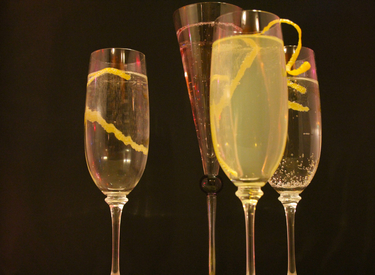
April Drink of the Month - Sparkling Wine Cocktails

One of the hardest ingredients for me to stock in my home bar is sparkling wine. Most drink recipes that call for bubbly only use 2-3 ounces, and I rarely make enough drinks to justify popping a cork on a whole bottle in one evening. Champagne stoppers are helpful tools, as they can keep sparkling wine fresh for up to one week – but even with this lengthier shelf-life, I often have a hard time getting through a whole bottle. However, few things scream celebration quite as much as champagne, and after a long winter, the impending arrival of spring deserves to be celebrated [editors note: I wrote this post on Monday, when sunlight and 40 degree temperatures got me excited for the promise of flowers and seasonal allergies. We have since had snow here in South Bend for the past two days. What the heck Spring?] With that in mind, this month Bar Kiley will be featuring a selection of sparkling wine cocktails. Perhaps you might be able to find an occasion to celebrate with one of these?

Need to learn more about types of sparkling wine? Check out the excellent tutorial from Serious Eats here.

Lemoncello Sparkler

This is a cocktail I first made to celebrate New Years Eve last year. This drink combines the tart and sweet lemoncello with orange-forward Cointreau and tops this all with 4-5 ounces of champagne. This can be served as a punch or by the glass. If served as a punch, garnish with large lemon wheels to add brightness. But if you are serving by the glass, try adding 2-3 frozen strawberries – the strawberry blends well with the other flavors, helps keep the drink cool, and provides a nice finish to the drink.
 
In a cocktail shaker, combine:
1 oz lemoncello
½ oz Cointreau

Add 2 frozen strawberries to a champagne flute. Shake lemoncello and Cointreau over ice for 10 seconds, strain over top of strawberries. Top with 4 oz of champagne and serve. Want to make your own lemoncello? The recipe is here.

Original Champagne Cocktail

The original champagne cocktail (the name really does say it all) combines two of the very best exports France has given us: champagne and cognac. This is a very sweet drink, and it is a drink that is extremely visually pleasing to construct. Make sure you build this drink in front of people!

Drop a sugar cube into a champagne flute. Douse the sugar with 2-3 dashes of Angostura bitters. Add ½ ounce of cognac on top of the sugar/bitters mixture and then top with 3 ounces of chilled champagne. Finish the drink with a maraschino cherry and a lemon zest.

Pear Bellini

While the Mimosa is the quintessential brunch beverage, my favorite socially acceptable way to drink in the morning is the Bellini. Peach is the most common Bellini variant, but I really enjoy this recipe which combines pear, lemon juice, simple syrup and Prosecco.
Peel and core 4-6  pears (either Bartlett or Anjou varieties). Place the peeled pears in a blender with ¾ cup of simple syrup and ¼ cup of lemon juice. Blend until you have a pulpy mixture that pours smoothly. You may need more or less syrup/lemon juice mixture depending on the amount of fruit you have.


Pour 1 to 2 ounces of pureed pear mixture into a champagne flute. Top with 3-4 oz of chilled Prosecco (not champagne – this is important!) and serve.

You might also want to try out the Veronica Rose again as well - find the recipe here.

Enjoy your champagne cocktails!

Wednesday, February 26, 2014

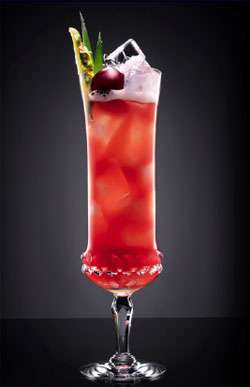
March Drink of the Month - The Singapore Sling

The Singapore Sling was one of the first "complicated" drinks that I ever learned to make. At the time, I had never heard of Cherry Heering or Benedictine, and so I spent way too much time online looking for acceptable substitutes that I may have had in my (then) tiny bar. I ended up making a cocktail that was little more than pineapple juice watered down with a little bit of gin, grenadine, and cheap cherry brandy (and as far as drinks go, it was stunningly mediocre). However, my interest was piqued and soon I decided that creating an acceptable Singapore Sling would be one of my first true bartending challenges.

The Singapore Sling comes to us from the Raffles Hotel in (you guessed it) Singapore, and it was first mixed in the mid-1910s. The term "sling" refers to any drink combining alcohol, fruit flavors, sugar, and water. Originally, bitters were required for a drink to be considered a cocktail, so other terms such as "sling," "fizz," and "flip" were used to denote the specific ingredients of the beverage.

The Singapore Sling is a "long" drink - which means that it contains significantly more liquid volume than a "short" drink. Note, however, that this does not necessarily mean that long drinks contain more alcohol - long drinks usually have similar alcohol content to short drinks, but the greater overall volume means that the drink is more diluted. The obvious exception to the rule here would be something like a Long Island Iced Tea. While you may serve a short drink in a rocks glass or a lowball glass, long drinks are almost exclusively served in highball (Collins) or hurricane glasses.


The key ingredients of the Singapore Sling are gin, citrus juice, and cherry flavoring, but many different recipes exist. While the IBA has a preferred recipe for the cocktail, almost every bar makes this drink their own way. The first bartending book I ever used suggested 5 oz of pineapple juice, which is way too much. I've also seen modern recipes that include zero pineapple juice. To each their own, I suppose. Below, I've included two possibilities for creating the Singapore Sling. Why not try them both out and let me know which you like?

Singapore Sling - Pineapple Heavy Recipe
In a blender, combine:
1 oz dry gin
1 oz Benedictine*
3/4 oz cherry brandy (Cherry Heering is preferable)
1/2 oz grenadine (use homemade if possible!)
1/2 oz Cointreau
1 oz fresh lime juice
4 oz fresh pineapple juice

Blend until pineapple juice creates "frothy" top. Pour into hurricane glass with ice cubes. Top with 2 dashes of Angostura bitters or float 1/2 oz of sloe gin on top using a bar spoon.

Singapore Sling - Light on the Pineapple
In a cocktail shaker, combine:
1 oz dry gin
1 oz Benedictine*
1 oz cherry brandy (Cherry Heering is preferable)
3/4 oz Cointreau
1/2 oz fresh lime juice
1 oz fresh pineapple juice

Shake over ice and strain into a highball (Collins) glass filled with ice cubes. Top with 2 oz of soda water and 2 dashes of orange bitters.

*Benedictine (despite the name) is not made by monks (bummer, right?). It is, however, a fantastic French herbal liqueur. It is often sold pre-mixed with brandy as "B&B." It is well worth investing in a bottle of Benedictine - it is an amazing after-dinner sipper, combining sweetness with herbal complexity. However, if you need to cut corners, use brandy here in a pinch, or yellow Chartreuse if you have that lying around for some reason (but at $60 a bottle, I'd just go buy the Benedictine instead of wasting the Chartreuse).

Enjoy your Singapore Sling!