Saturday, March 14, 2015

March Drink of the Month - The Last Word

Tax refund season led me to finally purchase something I've had my eye on for some time now: my very own bottle of Green Chartreuse. While I've found it online before for less than $50 for a 750 ml bottle, Indiana shipping laws prohibit me from going that route. $60 is the most I've ever spent on a single bottle of liqueur, but it was worth every penny. Made from a concoction of over 130 herbs and botanicals by French Carthusian monks, Chartreuse is both sweet and spicy at the same time, and has a distinct vegetal aroma. It smells wonderful and even a few drops of this stuff can add a major boost of flavor to a drink. The color "chartreuse" is actually named after this liqueur (and not the other way around), which is pretty neat. The monks also make a yellow version, which has a lower alcohol content (40% ABV instead of 55%) and is much milder and sweeter. If you want to plop down another $50, be my guest. But if you have to choose (say you are still on a grad student salary), make like an environmentalist and go green. You won't regret it. Also, one more fun fact - unlike many fine spirits, Chartreuse actually improves in the bottle - so if you find a dusty old bottle in your grandparents' basement, the flavors will have mellowed and improved with age.

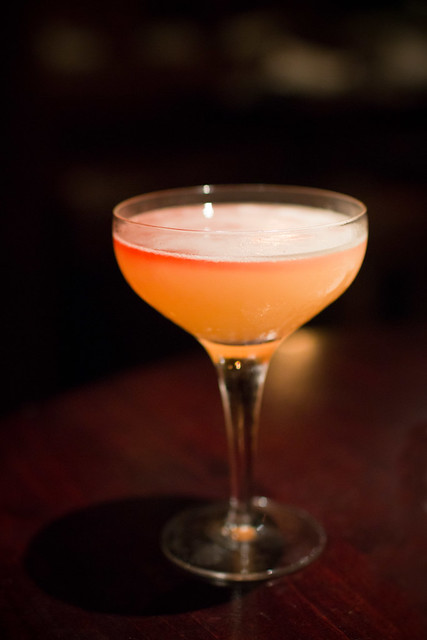
The crème de la crème of Chartreuse drinks is the Last Word cocktail, attributed to bartender Frank Fogarty of the Detroit Athletic Club. Apparently old Frank was a bit of a talker, which may have led to the name. Others insist that name is a nod to the fact that once you try one of these cocktails, you needn't look elsewhere. The drink mixes dry gin (with good strong juniper notes) with Chartreuse, lime juice and Maraschino (adding bitter, sweet almond notes). The combination of floral notes from the three spirits plus the fresh lime juice blend together wonderfully, creating a complex finish that is hard to explain (so go try one)! The Last Word is extremely popular among cocktail geeks (for good reason), so most fine bars would be happy to make you one, either on- or off-menu. The retail on the ingredients means this is a costly sipper, but you won't regret your investment.

Here is the recipe for making a Last Word at home:

In a cocktail shaker, combine the following:
3/4 oz dry gin (Beefeaters, etc)
3/4 oz Green Chartreuse
3/4 oz Maraschino
3/4 oz fresh squeezed lime juice (please, please, please don't use stuff from a bottle - this drink is too good to ruin with that crap)

Shake over ice and strain into a cocktail (martini) glass. Garnish with a lime wheel.

Enjoy your Last Word!


Saturday, February 7, 2015

February Drink of the Month - The Chapman Cobbler

Apparently beer cocktails are a big thing right now. With the craft beer revolution making nuanced, flavorful beer accessible to many people, I suppose it makes sense. However, since the reason I got into bartending and the art of the cocktail was because I strongly dislike beer, this trend offends me on multiple levels. Wine, on the other hand, is always a wonderful addition to any cocktail. Over the past six years, I've made many sparkling drinks using champagne or  prosecco (I converted my mom and sister - their go to drink now is the Saint Germain Cocktial), but I never really had occasion to play with fortified wines, like port and sherry. However, this Christmas, Imbibe magazine ran a "25 Days of Holiday Drinks" that featured several wonderful concoctions using fortified wines. My favorite of these was the "Chapman Cobbler," which uses Amontillado sherry.

If (like me), your only exposure to Amontillado sherry is from the classic Edgar Allen Poe short story ("The Cask of Amontillado"), then perhaps some tasting notes are in order. There are four basic types of sherry. From lightest (and lowest alcohol content) to darkest they are: Fino (fine), Manzanilla, Amontillado, and Oloroso. These wines range in color and taste from dry, pale white to rich, dark amber. There are plenty of other variations on these four basic types, like the Manzanilla Pasada or the Palo Cortado (the former is a nuttier version of Manzanilla that has been aged longer than normal while the latter is a wine that is aged similar to Amontillado but either by accident or intention winds up closer to Oloroso in flavor profile). There are also a number of cream sherry varieties. Despite the fact that the higher fortified sherries are dark amber and red, all sherry comes from white Palomino grapes grown in Andalusia, Spain. The name "sherry" comes from the name of the town where the wines are produced, Jerez ed la Frontera (Jerez became sherry when it was anglicized). Who knew there was so much to know about fortified wines? And we still haven't touched on port yet (but maybe some day soon - my dad has gotten into tawny port, so I need to find something to do with that)!

The drink we'll be making this month features Amontillado sherry, applejack, orgeat syrup and a little bit of creme de noyeux (as well as lemon juice to help cut the sweetness). Three of these key ingredients have nutty flavor profiles. Orgeat, we may remember, is an almond-based syrup. Creme de noyeux also has an almond flavor, but it is actually made from apricot kernels (much like amaretto). Finally, sherry is also quite nutty. The resulting cocktail is fairly sweet (applejack being very sweet as well), but the mixing of flavor notes makes it complex and the acid from the lemon helps balance the drink. Be cautious when mixing this drink - add a little too much of any ingredient and you will overwhelm yourself with sweet (especially if you overdo the creme de noyeux). But balance it properly, and you have a wonderful winter drink!

Here is the recipe for the Chapman Cobbler (a cobbler is a class of sherry based drinks from the 1800s, so named because they used "cobblestone ice" in drink. Who knew!):

In a mixing glass, combine the following:

1 oz applejack
1 oz Amontillado sherry
0.75 oz lemon juice
0.75 oz orgeat syrup
one barspoon creme de noyeux (one barspoon = one teaspoon or 0.17 oz)

Shake over crushed ice and dump into a double rocks glass. Garnish with a lemon wheel.

Enjoy your Chapman Cobbler! 
 

Sunday, January 11, 2015

January Drink of the Month - The Amelia

I was lucky enough to get a few new cocktail books for Christmas this year, and I'm sure they will influence my choices for Bar Kiley posts over the next few months. So far, I've been able to tackle two of them: Alchemy in a Glass by Greg Seider and Speakeasy by Jason Kosmas and Dushan Zaric. I've not yet had a chance to get through The Drunken Botanist by Amy Stewart, but I'm excited to read that one - it promises to have lots of tips on homemade bitters and tinctures, which is an area I'd like to play around with more.

Speakeasy was the most straightforward of the three books. It chronicles the best recipes from NYC's Employees Only bar, which was one of the establishments on the forefront of the cocktail revolution, featuring fresh and homemade ingredients. I was visiting my parents when I was reading Speakeasy, so there were plenty of cocktails I wasn't able to try out because I lacked the necessary ingredients.
However, one recipe caught my attention and was easy enough to make using what we had on hand (luckily I hooked my parents on the St. Germain cocktail last summer, so there was elderflower liqueur available!). Named the Amelia, this drink was meant to be a stepping stone from the Cosmo into the more nuanced world of craft cocktails. The recipe follows below. While this month's post might have been a little light on exposition, I hope to make it up to you with some good technique notes below:

In a mixing glass, combine the following ingredients:

1.75 ounces potato vodka
1 ounce elderflower liqueur
0.75 ounce fresh squeezed lemon juice
0,75 ounce blackberry puree*

*To make the blackberry puree, combine 1 cup fresh blackberries (one small carton) with 2 tbsp superfine sugar, 2 tbsp distilled water, and 2 tbsp lemon juice in a blender. Blend until smooth and coarse strain the mixture. It will keep for 3-4 days.

Shake the ingredients over ice, and double strain** into a martini glass. Garnish with a sprig of smacked mint leaf.***

**Double straining involves using both a Hawthorne strainer and a fine mesh strainer when you pour out your drink. The Hawthorne strainer gets out the big pieces of ice, while the fine mesh strainer will get out the remaining blackberry particulates that survived the coarse strainer and the chips of ice that occur when you shake your drink. The recipe in the book only calls for using the Hawthorne strainer, which left bits of blackberry puree floating in the glass. I like the mouthfeel of pureed fruit for some drinks, but since this is meant to emulate the Cosmo, we much preferred the drink to be smooth and clean without the itsy-bitsy bits of blackberry. Fine straining means that the puree still imparts plenty of flavor and juice to the drink, but it gets rid of the texture of the pulverized fruit.

***You smack herbs to release their essential oils and fragrance. Grasp the stem firmly in one hand and gently but firmly strike the leaf against your palm. Hit too hard and you bruise the leaf, but do it just right and you will release some wonderful scents!

I hope you enjoy your Amelia!

Wednesday, December 17, 2014

More Fun with Falernum

As promised earlier, here are a few other drinks I've tried out in the past few weeks as I keep playing with falernum. Two are classic Tiki recipes, but the final recipe is my own invention.

Captain's Blood Cocktail - there are more recipes for Captain's Blood on the interwebs than I care to count. All agree that the cocktail should feature rum, preferably dark rum. They all also contain lime juice and (often) bitters. Beyond that, there is little agreement. One bartender added a honey syrup. Others add maraschino, which would add nice aromatics, but was too bitter for my taste. Often falernum is featured, as it is in the recipe I offer below:

In a cocktail shaker, combine the following ingredients:
1.5 oz dark rum
0.5 oz lime juice
0.33 oz falernum (good double jiggers will have 1/2, 1 and 1 1/2 oz pours on one side, and 1/3, 2/3 and 1 oz pours on the other side)
0.33 oz simple syrup (demerara syrup would be preferable)*

Shake over ice and strain into a coupe glass. Top with 2 dashes angostura bitters. Garnish with a lime wedge.

*demerara syrup is made the same as regular (1:1) simple syrup, but uses demerara/turbinado sugar (usually sold as Sugar in the Raw in your grocery store). The molasses flavor pairs better with the dark rum.

The Zombie - the original cocktail of Don the Beachcomber, one of the fathers of the Tiki drink movement, the Zombie is a blended drink with an impressive ingredient list - a list which included three types of rum (and falernum of course)! This takes a few seconds to build, but I think it is worth the time! Chow has the original recipe here. I've made a few modifications, because even I couldn't justify buying Pernod for this drink.

In a blender, combine the following ingredients:
1.5 oz dark rum
1.5 oz golden rum
1 oz overproof demerara rum, such as Lemon Hart 151
0.75 oz lime juice (fresh squeezed of course - tiki should always be made with fresh ingredients!)
0.5 oz grapefruit juice
0.5 oz falernum
0.5 oz maraschino liqueur (this helps replace the pernod)
0.25 oz grenadine
2 dashes angostura bitters

Blend on low for 5 seconds. Add crushed ice and blend until frothy. Pour into a collins glass and serve.

The Oakland Bay Bridge - this is my riff on the Golden Gate Cocktail, which (like the Captain's Blood) has many versions floating around on the internet. Some of them are quite interesting (including a take on the classic French '75), while others are quite boring (like the recipe on Absolut's website). I decided to take that last recipe and slum it up a little, hence the name of the drink. It still retains the coloration you should expect in a Golden Gate, but it is less pretentious. The Oakland Bay Bridge was the best analog I could think of for this drink.

In a cocktail shaker, combine:
2 oz light rum*
1.5 oz orange juice
0.5 oz lime juice
0.5 oz falernum
2 dashes orange bitters

Shake over ice, strain and serve over ice in a collins glass.

*The first time I made this drink, I used Mailbu Orange Cream rum. Not bad, even if it was a bit over-sweet! The orange bitters are a better choice, however.

Friday, December 5, 2014

December Drink of the Month - The Ninth Ward Cocktail

The past two winters I've taken to making Tiki and tropical cocktails in order to fight off the chill of the Polar Vortex. When shopping at my local booze emporium this week (yay for City-Wide Liquors) I stumbled across a bottle of Falernum, one of the oft-forgotten Tiki ingredients. Falernum is liqueur with quite a low ABV - as low as 11%, though it usually hovers somewhere around 18%. It is made from a rum base, but also includes lime juice, sugar syrup, clove, ginger, and almond. There was an old rhyme that was used to help remember how to prepare Falernum: "One of sour, two of sweet, three of strong, four of weak." Were you to try to make this syrup at home, you've now got a pretty easy recipe: combine one part lime juice, two parts sugar syrup, three parts white rum, and four parts water. You would certainly still need to know the correct blend of clove, ginger, and bitter almond, but you're well on your way (Want to make your own? Here is a great recipe to try)!

How does one use Falernum? Turns out that Falernum is a great substitute for orgeat syrup in almost almost sip and enjoy (though Ann liked the drink much better when I accidentally doubled the Falernum the first time I tried the recipe - gah, was that sweet!). The elderflower liqueur lends sweetness and compliments the spice flavors in the Falernum, while the bourbon base adds warmth and a hint of spice as well. Try one this winter - not only will it warm up your insides, but its also delicious!
any case. I made a fantastic Mai Tai last week using Falernum and Cachaça. I will post that recipe and a few other Falernum recipes next week, but you can also let your imagination run wild! There are also quite a few classic cocktails that feature Falernum, including the Zombie and Captain's Blood. For this month's cocktail, however, I chose something that features a great blend of Tiki and belly warmth. For my money, you can't do a better "liquid jacket" than whiskey. Rum never warmed my insides the same way that a stiff shot of bourbon. With that in mind, I turned to this recipe from roving bartender Brother Cleve: the Ninth Ward Cocktail. This is a drink that even whiskey haters can

The Ninth Ward Cocktail
In a cocktail shaker, combine the following ingredients:

1.5 oz bourbon
0.5 oz elderflower liqueur (St. Germain or otherwise - St. Elder is a great substitute)
0.75 oz fresh squeezed lime juice
0.75 oz falernum
2 dashes Peychaud's bitters

Shake over ice, strain into a coupe glass and garnish with an orange rind zest (Coupe glasses are the best! Want to buy me a wedding present - coupe glasses would be great!).

Enjoy your Ninth Ward Cocktail!

Sunday, November 9, 2014

November Drink of the Month - Dark and Stormy (and Homemade Ginger Beer)

The first drink I ever made for Ann Mason was a Dark and Stormy. It was our fourth date, and we had just come into my house after being nearly swept away in a mid-summer South Bend monsoon. Their was a hockey play-off game on TV and my crazy roommates were still out on the porch, air-drying after frolicking around in the rain like pagans. Good times. I'd love to say that I chose to make the Dark and Stormy the drink of the month in honor of just passing the one year mark until our wedding, but that would be untrue (although it does make way better copy than what is to follow). Instead, Zack and I had both come across recipes for Ginger Beer - and what better way to taste test homemade Ginger Beer than in a Dark and Stormy? Below are the two recipes we tried out and then the recipe for the Dark and Stormy. The process is simple and only takes a day or two to ferment, so I hope you make your own Ginger Beer!

The first recipe we tried came from Imbibe magazine. They've been on a bit of a ginger kick lately. Two of their last four DIY recipes have been ginger themed (this month they have a recipe for homemade Ginger Liqueur, which I will clearly try out soon), so it was only a matter of time before I tried the recipe. Here is their step-by-step process:

1) Peel and coarsely chop 4 ounces of fresh ginger.
2) Place ginger in blender with 4 cups of filtered water and pulse until roughly puréed.
3) Pour mixture into a saucepan over medium-high heat. Add 1 cup turbinado/demerara sugar and 1 tbsp molasses. Stir until sugar is completely dissolved. Then remove from heat and allow to cool to just above room temperature.
4) Pour mixture into a 2-liter bottle, straining out and particulates through a double layer of cheesecloth. Make sure to squeeze the cheesecloth to extract as much liquid as possible.
5) Add 3/4 cup of fresh squeezed lime juice (fine strained to remove any particulates) and top off the 2-liter bottle with up to 4 more cups of filtered water until liquid is about 3 inches from top of the bottle.
6) Add 1/4 teaspoon of champagne yeast to the top of the mixture. Squeeze the bottle until the liquid comes up the neck (so that there is room for the bottle to expand as the mixture ferments). Screw the cap on tightly and let the bottle sit at room temperature for 12 hours, or until it is firm.
7) Move the bottle to the refrigerator, keep for up to one week.

This recipe produces a very dark ginger beer and the molasses flavor stands out nicely. The drink looks like root beer and has a nice spice aftertaste. It fermented very quickly - make sure to use care when opening the bottle for the first time so you don't get covered in carbonated fizz! This recipe was my favorite of the two we made. We also added a little clove to the mixture in the sauce pot, but the flavor was not terribly noticeable.


The other recipe we tried came from the Bar Book (which I mentioned in September). We adjusted their recipe in order to take advantage of the same empty 2-liter bottle method employed in the Imbibe recipe. The Bar Book recipe makes a gallon and then batches it out into 16 oz bottles. We modified it to make a single 2-liter bottle's worth. Below is the step-by-step process: 

1) Make 5 ounces of ginger juice by pulsing 3/4 cup of peeled, coarsely chopped ginger in a blender with enough water to create a thick liquid. The consistency should be much closer to smoothie than stew, but be careful not to add too much water. Strain the mixture through a double layer of cheesecloth, making sure to squeeze the cheesecloth to extract as much liquid as possible.
2) In a large container, combine the 5 ounces of ginger juice with 4 1/2 cups of warm, filtered water, 8 ounces of freshly squeezed, finely strained lemon juice, and 14 ounces of 1:1 simple syrup. Stir the mixture for 2-3 minutes to ensure that all the ingredients are well mixed.
3) Pour mixture into an empty 2-liter bottle (up to 3 inches from top of the neck) and then add 1/4 teaspoon of champagne yeast. Squeeze the bottle until the liquid comes up to the neck, then close the cap tightly.
4) Shake the mixture well and then store in a warm dry place for up to 48 hours, until the bottle has expanded.
5) Move the bottle to the refrigerator, keep for up to one week.

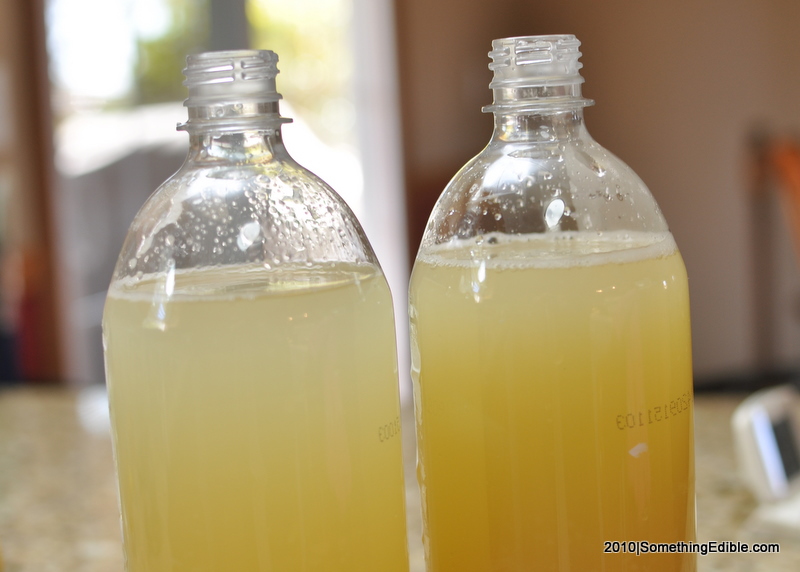
This recipe was slightly more involved - it required pre-making simple syrup and the ginger juice making process was a bit messier than the ginger-water process for the Imbibe recipe. However, Zack liked this recipe better. The result looks very different - this ginger beer looks like cloudy lemonade and has a much sweeter taste (but still has the nice, spicy ginger finish).

One quick note: where do I find ginger? Might I suggest your local Hispanic grocery store? We found fresh ginger for less than $1.50 a pound, whereas it retailed for over $4.50 a pound at our usual supermarket. Champagne yeast can be found at any local home brew store - we used Montrachet yeast at the suggestion of our local guys.

You can use either of these ginger beers to make a Dark and Stormy. Technically a Dark and Stormy should be made with Gosling Ginger Beer and Gosling's Black Rum (they own the trademark for the name), but any dark rum works. However, do not use dark spiced rum, such as Kraken, as the combination of spiced ginger beer and spiced rum can be off-putting. The (extremely simple) recipe is below:

1) Fill a Collins glass with ice.
2) Add 2 ounces dark rum (I use Myers Dark) and 4 ounces ginger beer.
3) Squeeze in the juice of 1/4 lime and drop in as garnish.
4) Serve with a straw for stirring the drink.

 Enjoy your Dark and Stormy!

Monday, October 6, 2014

October Drink of the Month - The BB Gun (and Fun with Shrubs!)

The most recent issue of Imbibe magazine decided to run a feature this month on shrubs. Sometimes called "drinking vinegar," a shrub is a combination of fruit (and sometimes herbs), sugar and vinegar. Shrubs first popped up in North America in colonial times and gained popularity during the temperance movement as a alternative to spirits. Recently, shrubs have gained popularity as a replacement for bitters, especially in rum and brandy cocktails. They have a really unique sweet and sour flavor and are pretty easy to make at home.

There are multiple ways to make shrubs, but one of the easiest is the cold-process, a means of preparation that takes a little time, but yields a beautiful product. Using a process called maceration (letting the fruit soften in juices in order to extract the flavor) we slowly release the flavor of the fruit and combine it with the acidic vinegar to produce our shrub. For today, we'll detail the process of making a blackberry shrub, and then offer two preparations - as a soda or as a the BB Gun Cocktail (from Jessica Braasch via Imbibe).

To make the blackberry shrub, wash and place two cups of blackberries in a mason jar. Sprinkle 1/2 cup of sugar over the blackberries (I used turbinado sugar since we will be pairing this shrub with aged rum in the cocktail). Allow the berries and sugar to sit for 12-24 hours. Similar to the preparation for strawberry shortcake, the sugar will slowly draw out the juice from the berries, resulting in a sweet, dark syrup. Gently shake the jar and/or crush the berries from time to time to make sure as much berry surface area comes into contact with the sugar as possible. After the allotted time, add 1 cup of apple cider vinegar to the jar. Stir occasionally to make sure all the sugar is dissolved. Allow the mixture to sit, covered, for another 24 hours. Finally, strain the mixture using a fine mesh strainer into a clean jar. Press on the berries in the strainer with a wooden spoon to extract all of the good juice out of the berries before discarding. You should be left with a beautiful, clear dark purple liquid (that will stain your counter top like the dickens, so be aware).

The shrub can be used on its own to make a soda by combining it with seltzer water. Simply add the desired amount of shrub to a glass and top with soda water. I used 2 oz of shrub and 8 oz of soda for a refreshing, sweet and sour concoction. If your tastes run sweeter, you can also add a splash of simple syrup to the mix.

However, our reason for making the shrub was to try out a new drink featuring aged rum. Below is the recipe for the "BB Gun" recipe from Kask in Portland:

In a cocktail shaker, combine the following ingredients:
1.5 oz aged rum (I used Bacardi 8 Anos - this is the most readily available)
1 oz blackberry shrub
3/4 oz fresh lime juice
1/4 oz 1:1 simple syrup (I ended up using closer to 1/2 oz, but I'm an unrepentant "sweet" drink guy)

Shake over ice and strain into a Collins glass filled with ice. Top with soda. The recipe calls for a garnish of mint leaves and a lime wheel.

The drink has an incredibly different taste from most cocktails. The lime helps bring out the tartness of the vinegar even more than when the shrub is alone with soda water. The blackberry adds nice sweetness and the rum is a great base for the drink, adding just a hint of smokiness. This would make a great porch sipper for the end of summer or perhaps for when you are cooped up in your kitchen on a cold October day, trying to remember that summer will one day return.

Enjoy your BB Gun!