Tuesday, December 10, 2013

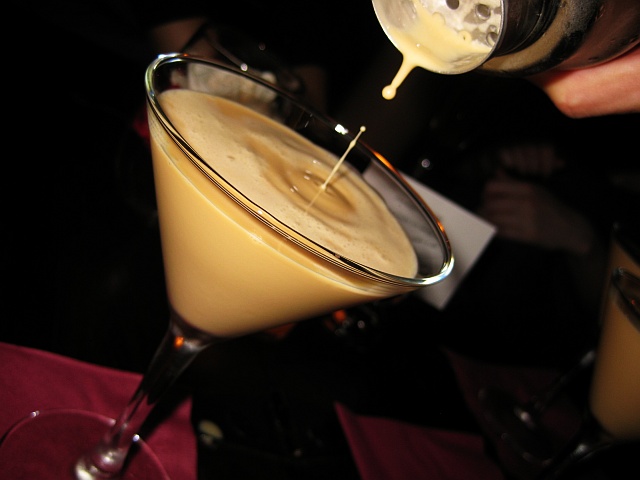
December Drink of the Month - The Opera Glove

I have not yet given my friend Matt Haggerty enough credit on this blog. Bar Kiley the blog came about because Matt suggested that I blog about my hobby and he has continued to be one of the blog’s biggest supporter (and, to date, still the only person to post a comment on the blog). Last month, he sent me a link to a few holiday drinks (found here), and I thought we might try out one of them for December – the Peppermint Alexander. It seemed perfect after we had featured the Brandy Alexander last month, so I went out last week and picked up a bottle of Godiva White Chocolate liqueur for Zack and I to play around with at the bar.

We dutifully made up the Peppermint Alexander as per the recipe linked above (equal parts white chocolate liqueur, vanilla vodka and peppermint schnapps with a splash of cream), but we were a little disappointed with the result. The peppermint flavor was way too strong and it drowned out the white chocolate flavor almost completely (which is a problem given the price tag on the Godiva liqueur). It was not an unpleasant drink, but the other flavors did not add much to the overriding strong notes of peppermint.

We tried a few different ways to modify the drink, but we weren't really happy with any of our results. I included the best version of the drink below, but ultimately we decided to move on and see if we couldn't find a new way to feature the Godiva White Chocolate liqueur with our own recipe. We decided  we wanted to keep the vanilla hints featured in the Peppermint Alexander, but we chose to feature brandy as the main flavor in the drink. The smoothness of the brandy gives a nice boozy flavor to the Godiva liqueur, but it is not overwhelming – the white chocolate still came through quite nicely. We named our creation the “Opera Glove” because it was long, white and classy. We hope you enjoy it!

The Opera Glove Cocktail
In a cocktail shaker, combine
1.5 oz Godiva White Chocolate liqueur
1 oz VS or better brandy
0.5 oz vanilla schnapps
Splash of cream or half & half

Shake over ice until the drink is frothy, strain and serve is a martini glass. If you are a chocolate fan, this drink could benefit from a spiral drizzle of chocolate syrup in the center as a garnish. However, if you’re me (and you are a weirdo and don’t like dark or milk chocolate), garnish the rim with a strawberry.

A few notes, as always:
*The same notes concerning cream from the Brandy Alexander apply here. I would recommend half and half for the Opera Glove – but feel free to use a “large-ish” splash – I think this drink tastes better when it is a little thicker.

*The same notes about brandy found in the Side by Sidecar post also apply here. If you are willing to invest in the Godiva liqueur (you don’t need to – there are cheaper white chocolate cream liqueurs), then you should make sure the rest of your ingredient are up to the same level of quality. VS is great, VSOP is even better.

We hope you enjoy our creation. As an added bonus, here is the modified recipe for the best version of the Peppermint Alexander:

In a cocktail shaker, combine:
1 oz Godiva White Chocolate Liqueur
0.5 oz vodka
0.5 oz vanilla schnapps
1/3 oz peppermint schnapps
2/3 oz cream

Shake over ice until the drink is frothy. Strain and serve in a martini glass. Garnish with a small candy cane as a stirring stick.

Enjoy your Opera Glove!

Friday, November 22, 2013

Fun with Infusing

The first lesson I ever learned about infusing alcohols came by way of my little sister, Katie. My mom used to make homemade vanilla extract by throwing a few whole vanilla beans in a bottle of cheap vodka and letting them steep for a couple of months. This is perhaps one of the easiest and most rudimentary forms of infusions that you can make, but it works great. I would have remained blissfully unaware of this whole process if my little sister had not made a mistake while measuring out ingredients for a banana milkshake.

In our family, any good milkshake calls for 1-2 tsp of vanilla extract, and we would use Mom's homemade stuff in our concoctions. When Katie was in elementary school, she was in the habit of making herself a milkshake every night after her gymnastics practice. For about a week straight, my parents couldn't figure out why Katie was so loopy and so sleepy each night after gymnastics. Then we discovered that she had a little trouble following recipes - instead of using a tsp of vanilla extract, Katie was throwing in a 1/4 cup or more. Turns out Katie was unintentionally spiking her milkshakes each night! And thus, I was both introduced to the joys of homemade infusions and tipsy eight-year-olds at the same time.

Infusions are a fantastic way to try new flavors and spice up old cocktails. All you need for this process are some mason jars, a good lemon zester, cheesecloth, patience and some creativity! Infusion is the process of adding flavor to neutral spirits (usually vodka, but you can also play with almost any liquor) by steeping fruits/berries/nuts/peppers/you name it in said spirits for several weeks at a time. The Art of Steeping has some great recommendations on how to prepare your various ingredients for infusion, but really the sky is the limit. Below are easy-to-follow recipes for two of my favorite infusions: Cranberry-Ginger Rum and Lemoncello, as well as some cocktail suggestions for each. I hope you enjoy both of these, but also feel free to experiment on your own (and let me know if you find anything good!)

Cranberry Ginger Rum

You will need: 1.5 cups cranberries, washed and with stems removed, 3-4 pieces of crystallized ginger, one 750 ml bottle of mid-grade silver rum (Appleton, Bacardi, etc), 0.5 cups sugar, cheesecloth

In a saucepan on medium heat, add cranberries and sugar with 2-4 oz of water. Stir until sugar is completely dissolved and cranberries have "popped" (when heated, the s.kin of the cranberries should burst in a cross-hatch pattern, so that each cranberry looks like a little hot cross bun). Remove from heat and place in large mason jar. Add 2 tbsp of crystallized ginger, chopped finely. Pour your bottle of rum over this and seal the mason jar tightly. Let the mixture sit for 5 days, shaking the mixture daily to prevent the ingredients from settling. Remove the cranberries from the mixture with a slotted spoon and strain the liquid back into a stoppered bottle or mason jar using a cheesecloth and funnel. Enjoy!

Spiced Ocean Spray Cocktail
Fill a highball glass with ice
Add 1.5 oz cranberry ginger rum

Top with lemon-lime soda

Stir mixture with bar spoon for 5-10 seconds
Garnish with 1/8 lime wedge

Cranberry-Ginger Mojito
In a highball glass, muddle 7-10 cranberries, 6 springs mint, 3-4 small lime wedges and (optionally) one slice of crystallized ginger with 1.5 ounces of simple syrup.
Add 1.5 oz cranberry ginger rum
Add ice to fill glass
Top with soda water
Stir vigorously with bar spoon for 5-10 seconds
Garnish with 1/8 lime wedge

Lemoncello

You will need: 6 large lemons, lemon zester, 750 ml bottle of mid-grade vodka (New Amsterdam, Svedka), distilled water, superfine sugar, cheesecloth

Zest your six lemons*, and place the peels in a large mason jar. Ensure that there is NO pith (the foamy white inner skin of the lemon) on your peels during the zesting process - failure to remove the pith will result in an extremely bitter, nearly undrinkable concoction. Pour your bottle of vodka over top of the lemon zest, seal your jar and let sit for 6-10 days, agitating daily. While you are waiting, prepare 750 ml of simple syrup using distilled water and the superfine sugar in a 1:1 ratio (don't remember how to make simple syrup? Here you go!). After 6-10 days, add 750 ml simple syrup** to the vodka-lemon zest mixture and re-seal your mason jar, allowing the vodka-syrup mix to steep for an additional 2-3 days. Filter the liquid 2-3 times using a cheesecloth and funnel to remove any free-floating particulates, then bottle and refrigerate. Enjoy!

*Note: You can go crazy with other citrus options as well. By far my favorite non-lemon option is Blood Orange. If you choose to go this route, zest 4 large blood oranges and add the juice of one of the oranges to the vodka/zest mixture to give it a little extra blood orange flavor.

**Note: Because you have added the simple syrup to your vodka mixture, the resulting proof of your liqueur will be half that of the vodka you began with. Most lemoncello is 40 proof (20% ABV). If you would like stronger lemoncello, use a stronger grain alcohol a you base, such as everclear.

Lemon Drop Martini
The simplest way to make this little number is to combine 2 oz lemoncello with 1 oz vodka, shake the mixture over ice, strain and serve in a martini glass. If you prefer a slightly more tart martini (or less sweet), follow the instructions below:

In a cocktail shaker, combine:
1 oz vodka
1 oz lemoncello
0.5 oz simple syrup
0.5 oz lemon juice

Run a lemon around the edge of a martini glass, and then rim the glass with sugar. Shake the ingredients, strain and serve in the sugar-rimmed glass. Garnish with a lemon zest (you can save the zest you used to make your lemoncello - the steeping process makes them boozy and a little chewy, but kind of a fun addition)

Friday, November 1, 2013

An Apology to Cointreau

Dear Cointreau,

I'm sorry. For the better part of a year, I've been trying to convince myself that you are nothing special (see, for instance, the now redacted statement here). I've told myself that you are nothing more than fancy, over-priced triple sec and that you were not worth my time or my discretionary spending money. I was wrong. For this, I owe you an apology. I hereby vow never to make another Sidecar without you again (unless its for a rude house guest - in which case they're getting a Sidecar with lemon juice from a little lemon bulb, non-VSOP brandy from a plastic bottle, and the worst triple sec I can find).I hope you accept my apology and that we can be better friends moving forward.

Sincerely,
Robby


Well, I finally did it - I found Cointreau on sale and ponied up the $35 for a bottle of what I thought was glorified Triple Sec (which discerning consumers can find for under $10 a bottle...). But enough people had tried to sell me on the merits of Cointreau that I figured I should at least give it a try. Turns out they were spot-on. While its true that you can find decent Triple Sec on the market, Cointreau markets themselves as the Triple Sec, the one that sets the industry standard. And boy, does it ever. Zack and I treated ourselves to some fine Cointreau Sidecars right away, and the difference was extremely noticeable. There were lovely hints of clove, nutmeg, cinnamon along with the bittersweet orange flavor that enhanced the Brandy/lemon juice pairing quite well. The Sidecar has become one of my top five favorite drinks over the past year, and the addition of Cointreau makes it even better. As stated above, I hereby resolve never to make another Sidecar without Cointreau.

One note: Unlike Grand Marnier, Cointreau is not super-duper for sipping by itself. Grand Mariner comes from the curacao family (rather than the triple sec family) and so is a brandy based liqueur. For that reason, it overwhelms a lot of cocktails and makes them too boozy. But Grand Mariner is a fantastic aperitif - it stands alone quite well. Cointreau should not be sipped by itself, but man does it go great in any drink calling for Triple Sec. It is worth the investment, especially if you can find it on sale (if you see it in the $30 dollar range for a 750 ml bottle, that is a great price).

November Drink of the Month - The Brandy Alexander

This month's drink is dedicated to my mom, who is perhaps the biggest fan of this blog that I know. Thanks Mom, for enjoying my writing and for supporting my hobby.

As the calendar flips to November and the leaves start falling off the trees, perhaps it is time to cut back on wonderful, light citrus drinks made with club soda and fancy floral liqueurs. While I enjoy a good Saint Tropez most any time, it doesn't really fit most people's mood come winter time. As I write this, we are in our third day of cold (not quite freezing) rain in South Bend, which means its time to begin breaking out the heartier drinks as folks settle in for the freeze. 

For some people, winter means only warm drinks, but this is not a policy I adhere to. While warm spiced apple cider is quite delicious with rum or brandy, there are plenty of iced drink options that can help you get through the snowier months. The key here is to mix in heavier ingredients - crèmes and cream - with your liquors in order to produce a more robust drink that helps fill your belly on a cold night.

By special request, we'll feature my mom's favorite of all these heavier drinks this month: the Brandy Alexander. This drink originated in the twenties (like many great cocktails) and combines heavy cream, dark crème de cacao and brandy or cognac. It is a variation of the original "Alexander" drink, which was made with Gin. But where does the name Alexander come from? Stories vary - it might have been named after the bartender, perhaps a drink critic, or perhaps even Tsar Alexander II of Russia.

Here is a simple recipe for the Brandy Alexander:

In a cocktail shaker, combine:
1 oz brandy (cognac is preferred - if not, ensure brandy is VSOP)
1 oz fresh cream*
1 oz dark crème de cacao**

Shake WELL over ice*** and strain into a martini class. Garnish with a light sprinkling of ground nutmeg.

Obligatory notes:
*There are many difference of opinion over what kind of cream to use. Most of the recipes I consulted called for heavy cream. Our finding was that this made the drink a little too thick and heavy. I would recommend trying half-and-half the first time you make the drink. If you enjoy the taste, stick with half-and-half. If you want it a little thicker (or if you grew up on whole milk like my cowboy roommate), consider moving up to heavy cream for your second round.

**Chocolate liqueurs are also an acceptable substitute here. Godiva makes a very nice liqueur that would work quite well, but standard DeKuyper mixers work fine here. Just make sure you purchase DARK crème de cacao - the liqueur should be a caramel color.

***Since this is a cream drink, you will need to shake it quite a bit to get a good consistency. You can also make this drink in a blender if you are concerned about your shaking abilities. The Brandy Alexander can also be served as a frozen drink. If this is your preference, follow the above steps, but add 1/2 cup of ice to the recipe and make the whole thing in the blender.

Enjoy your Brandy Alexander! And stay warm!

Saturday, October 5, 2013

October Drink of the Month - The Apple Cider Margarita

I've always felt a little left out once the leaves start to turn - my dislike for coffee  & beer means I've never been a part of the Pumpkin Spice Latte or Pumpkin Porter phenomenon. However, there are many other ways to celebrate the fall, and one of my favorite is with Apple Cider. Here in South Bend, we're near any number of apple orchards (both in Northern Indiana and in Southwest Michigan) and they always have excellent, fresh cider. Chilled cider is an excellent drink by itself and mulling cider with rum and spices is even better. But the best drink I've yet encountered with apple cider is this month's feature: the apple cider margarita!

First a quick digression on the Margarita: ever wonder where everyone's favorite tequila drink comes from? There are many stories and several bartenders claim to be the first to combine fresh lime juice and orange liqueur with tequila. However the most convincing story I've heard is that the Margarita originated during Prohibition. While the 18th amendment was in force, liquor happy Americans often crossed the Mexican border looking for libations. One of the more popular drinks of that time was a Daisy, which featured brandy, orange liqueur and lemon. Unfortunately, brandy was not always available, leading enterprising Mexican barkeeps to substitute the ever-present tequila for brandy. They named it a "Margarita" which is Spanish for "Daisy." And thus a classic was born!

A typical margarita combines roughly two parts tequila with one part Cointreau and one part lime juice. Following the International Bartenders Association guideline, which is more rigorous, a margarita should be 7 parts tequila, 4 parts Cointreau and 3 parts lime juice. The apple cider margarita is a different animal entirely. Lime juice is quite tart and a little bit goes a long way, hence the small proportion. Apple cider, however, is a much more refreshing cocktail base and so this margarita features a much higher proportion of juice/cider base. Here is the recipe I traditionally use:

In a cocktail shaker, combine the following ingredients:
3-5 oz apple cider (to taste - I prefer it closer to 5 oz)
1 oz tequila reposado*
1 oz orange liqueur**
3 dashes orange bitters

Shake over ice and strain into a margarita glass with a cinnamon sugar rimmed lip (optional). Garnish with an orange slice in the bottom of the glass and a cinnamon stick. Resist the temptation to make this into a frozen drink - it sips much better chilled. Because the total alcohol content is lower than in a regular margarita, too much ice makes the drink bland.
 
*You'd like a lesson on the different types of tequila you say? Of course, I'd be happy to provide! All tequila comes from the roasted "nuts" of the blue agave plant. To be tequila, it must be produces in the Mexican state of Jalisco. There are three types of tequila: blanco, reposado and añejo. In English, we would call these three "silver," "gold," and "aged" tequila. Tequila blanco has not been aged at all - it is the blue agave equivalent of vodka, which is why it is clear. Tequila reposado ("rested") has been aged in an oak barrel for at least two months. This is the most common form of tequila. Tequila añejo has been aged for at least a year in an oak cask. Tequila extra añejo has been aged at least three years. Aged tequila tastes much more like good whiskey and is suitable for sipping.
 
**As always, a note on orange liqueurs: because of the high proportion of cider, you can't really distinguish the flavor of Cointreau from triple sec. Use the cheap stuff. Grand Mariner actually does give a slightly different taste in this drink - use GM if you'd like a stronger hint of orange (but you can also accomplish this with more orange bitters, leading back to my initial point - use the cheap stuff).

This makes an excellent drink for any fall occasion - just make sure you get some fresh cider. Its worth the drive!

Enjoy your Apple Cider Margaritas!

Wednesday, September 4, 2013

The "Side-by-Sidecar" Comparison Test

One of my all time favorite drinks to make for people is also one of the simplest drinks to make. The Sidecar is a simple mix of lemon juice, orange liqueur and brandy, usually in equal proportions. Here is the traditional sidecar recipe that I most often use:

In a cocktail shaker, combine:
1 oz brandy
1 oz orange liqueur
1 oz fresh squeezed lemon juice

Shake over ice, strain into a martini glass and serve.

A couple of quick notes (after all, it wouldn't me a post from me without a couple of quick notes):
1) The orange liqueur of choice for the Sidecar is Cointreau, but the drink does not suffer too much from using a decent Triple Sec instead. Cointreau is worth the investment - it really adds to the drink! But if it is too pricey for you, standard triple sec will do in a pinch. Grand Marnier is a bit too strong of an orange flavor for this particular cocktail
2) As always, fresh squeezed lemon juice is better than store bought lemon juice. I often enjoy my lemon juice a little "pulpy" in drinks such as a whiskey sour, but this is one case where you will want to make sure to strain all of the pulp out of your lemon juice before adding it to your mixture. Since the drink is served without ice and in a martini glass, the lemon pulp is quite noticeable and reduces the drink's aesthetic appeal.
3) Make sure you use an aged brandy - anything with VSOP on the label will work! VSOP is a measurement of how long your brandy has been aged (and it stands for "Very Superior Old Pale"). If you see "VSOPX" or "XVSOP," the "x" stands for "extra" and means it has been aged longer (and is thus superior).

Where does the Sidecar get its name, you may ask? I'm so glad you asked (this is one of my favorite
stories)! While most drinks are named after the bar that first served the drink, the bartender who invented it or named as tributes to famous individuals, the Sidecar is named after the mode of transportation of the class of people who most commonly ordered the drink. The Sidecar was a favorite of French military officers during WWI. Because these officers were too important to drive themselves around, the often rode in the side car of motorcycles - hence the name "Sidecar." The Apple Cart cocktail that we made back in May 2013 is a variation on the sidecar that features Calvados (apple brandy) and changes the traditional sidecar proportions just a little bit.

Inspired in some way by the Apple Cart, my friend Zack and I set out to perform a side-by-side comparison of other such sidecar variations. Brandy is traditionally made from grapes, but can be made from many other fruits, and the variety of fruit brandies is staggering. After a quick trip to the local liquor store, we had in our possession the following fruit brandies: Blackberry, Apple (Calvados), Cherry, Kirschwasser (a German variation on cherry brandy that is noticeably more sour) , Apricot and Cranberry Schnapps (technically many schnapps are forms of Brandy. However, the schnapps we bought were the American version which combines neutral spirit with fruit flavor). We mixed up mini-sidecars with the six different brandies above and voted on our favorite combinations (substituting the fruit brandy for the grape brandy in the recipe above) - our results are below!

Side-by-Sidecar lineup

Best Flavored Sidecar: Apricot Sidecar
The Apricot Sidecar looked very similar to a traditional brandy Sidecar, perhaps even a shade lighter. The apricot flavor was an excellent compliment for the lemon-citrus flavor. The aftertaste was pure apricot, no lingering harsh lemon flavor. It was most excellent, our favorite by far.

Worst Flavored Sidecar: Cherry Sidecar
The Cherry Sidecar came out a muddy red-brown color, and didn't much improve over its mediocre first impression. The drink smelled funny. I'm not even sure how to describe it, but it was weird. As for taste? It was way overly-sweet and ended up tasting mostly like cough syrup. The aftertaste was a strong cherry flavor that left a syrup-y feel. No thanks. I'll keep the cherry brandy on the shelf for making Singapore Slings, but that's about it.

Best/Worst of the Rest:
Second Place: Apple Sidecar - the Calvados sidecar did taste different from the Apple Cart (a good reminder that proportions matter when making drinks - measure carefully!), but it was not terribly different taste-wise from a traditional (grape) Brandy Sidecar. The apple taste was muted by the stronger concentration of lemon juice. This was the most tart of all the sidecars we mixed.

Third Place (*Barry Bonds* division): Cranberry Sidecar - since the Cranberry schnapps we had was the wimpy DeKuyper 15% ABV stuff that is more sugary flavored vodka than true brandy, we decided to add a 1/2 pour of (grape) brandy and a 1/2 pour of the cranberry schnapps to our trial drinks. Without the actual Brandy to bolster it, this drink was quite weak. But with the addition of actual brandy, we wound up with a nice drink. It was a vibrant purple that caught the eye, and the cranberry tart went well with the lemon. The aftertaste was quite lemon-y, however.

Fourth Place: Kirschwasser Sidecar - unlike the traditional cherry brandy sidecar, the Kirschwasser sidecar was not overly syrup-y or too sweet. It came out as a cloudy, mostly clear drink with a muted cherry flavor. It was a bit harsh at first, with strong lemon flavors, but the aftertaste was a pleasant cherry that muted the lemon and left you with an agreeable taste for a few minutes.

Fifth Place: Blackberry Sidecar - this was the opposite of the Kirschwasser Sidecar. It had a strong blackberry taste on the first sip, but the aftertaste was pure lemon. It was a fairly forgettable drink that came out a cloudy light purple/pink. Blackberry brandy can be put to much better uses, including in the Long Island Berry Iced Tea.

Thoughts? Have another option we should try? Think we were horribly wrong to dismiss the Cherry Sidecar? Let us know! And enjoy!

Tuesday, September 3, 2013

September Drink of the Month - The Saint Tropez

One of the best things about this summer in South Bend was the opportunity to take day trips all over southwest Michigan, visiting awesome little towns, wineries/breweries/distilleries and beaches. One of my favorite little SW Michigan towns is Sawyer, MI, home to the excellent Greenbush Breweries. Even if you are not a beer drinker (guilty), their BBQ beef brisket sandwiches are most excellent and worth the drive.  Last weekend, however, Ann and I decided to try something new and head to Greenbush's next door neighbor, a swanky little bistro called Fitzgerald's. I've often walked past Fitzgerald's, and I've always been intrigued by the rotating list of martinis they advertise in their windows, but this last weekend was the first time I had even been inside. We were both pleasantly surprised with our food (turns out their BBQ is pretty good as well), but the highlight of the trip was the chance to try out some new cocktails.

At least a quarter of Fitzgerald's cocktail menu featured St. Germain, a liqueur made from "elderflower" (otherwise know as the flower that blooms on elderberry plants). All terrible Monty Python jokes aside, St. Germain is a lovely base for many cocktails - it is both sweet and citrus-y and blends excellently with white wines. The classic St. Germain Cocktail is made with combination of champagne and sparkling water - the resulting cocktail has all the bubbly fun of champagne but heightened citrus and floral flavors that give it a unique taste. Fitzgerald's featured the St. Germain cocktail, but also a number of other creations. I tried something off the menu featuring St. Germain and bourbon that was fairly decent, but Ann hit the jackpot with a Saint Tropez.

As is sometimes the case with cocktails, there are several recipes floating around for the Saint Tropez, and they couldn't be any more different from each other. One popular recipe features Dubonnet (a French fortified wine) and orange juice. Another recipe turns the beverage into a alcohol-free passion fruit concoction. However, the Saint Tropez we enjoyed in Sawyer was completely different from these types of drinks. While the recipes listed above feature heavy flavors and are quite syrup-y, the St. Germain based Saint Tropez cocktail is extremely light and bubbly. The flavors are extremely light and muted, but compliment each other extremely well to make it an excellent picnic drink on a hot summer day. Here is the recipe we used for the Saint Tropez cocktails we made at home the next week:

In a cocktail shaker combine the following ingredients:
1 part Absolut Citron or similar lemon vodka
1 part Saint Germain
.25 part lemon juice

Shake over ice and strain into a Collins (high ball) glass filled with ice
Top with soda water and a lemon peel garnish (Fitzgerald's also added a strawberry)

The resulting cocktail should be mostly clear with a slight yellow/gold hint. This is a very "clean" tasting cocktail - the flavor notes are very subtle and this is not an extremely concentrated drink. If you feel like adding a little more flavor or variety to the drink, I suggest replacing the lemon vodka with cherry vodka or adding a few dashes of cherry bitters to your liquor mix before you shake/strain. The cherry flavor adds an extra note without overwhelming the elderflower and lemon.

Enjoy your Saint Tropez - and do it soon, there's only so many day of summer left to drink light cocktails like this! Soon we'll have to turn to heavy, cream-based cocktails to keep warm!